

Why the French Mairie Isn’t Just a Town Hall
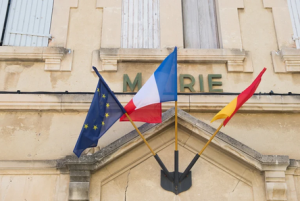
Two hats, one office
If you’ve recently moved to France, you’ve probably been told to “go to the mairie.” Sensible advice—but the mairie isn’t quite the local government office you might be imagining.
What makes the French system unusual is that the maire wears two hats.
As the elected head of the commune,* the mayor runs local services and represents the local community.
But for certain legal functions, the maire is also acting on behalf of the French state.
Recording civil status
That’s why births and deaths are recorded at the mairie. It’s also why civil marriages are conducted by the maire, or a deputy acting on the mayor’s behalf. These responsibilities aren’t handled by a separate registry office or another level of government. They’re entrusted to the mayor in every commune across France.
It’s an unusual arrangement by international standards. It’s also one of the reasons the mairie has such an important place in everyday French life. It’s not simply somewhere to deal with paperwork. It’s where local government and the French state meet.
Respected, but not necessarily well paid
The role also carries a great deal of prestige, particularly in smaller communes. Most French mayors are modestly paid, especially in rural areas. Many balance the office with another career.
A capable maire who is seen to serve the community well often enjoys real respect from local residents, regardless of political affiliation.
The mairie at the heart of local life
Beyond civil registration, the mairie is the administrative and social hub of your commune. Here’s what you’ll typically go there for:
- Registering children for school
- Applying for planning permission if you’re renovating
- Obtaining copies of civil records
- Finding out about local services—from bin collection schedules to the annual vide-grenier
(Quick aside: if you’re a non-EU national applying for or renewing a carte de séjour, you’ll usually be dealing with the préfecture, not the mairie. Different building, different process.
In many communes, the mairie even hosts an annual welcome reception for new residents—a chance to meet the mayor, councillors and local associations over a vin d’honneur or, in the South-West, an apéro. Not every commune does this. But it is a good illustration of the mairie’s role as the civic heart of the community – as well as a good way to meet other newcomers.
Once you understand what the mairie represents, a lot of French administration starts to make more sense. It isn’t simply a council office, or a place to have forms stamped. Sooner or later, almost everyone living in France will find themselves walking through its doors.
* Commune is one of those French words that has no good translation in English. The commune is the base unit of French local government, and every inch of France belongs to one, whether it’s a village of 150 people or a city of two million. Each has its own mairie and its own maire.
Quirky France : Until recently, Paris’s mayor was Mme Anne Hidalgo. Her offices were in the Hôtel de Ville, overlooked by the 5th floor restaurant in the BHV department store.
The waiters liked to joke about having a vue sur la Maire/la Mer 🌊.
Moving to France, or stuck in the admin maze?
Get practical, bilingual support that gets things done.